

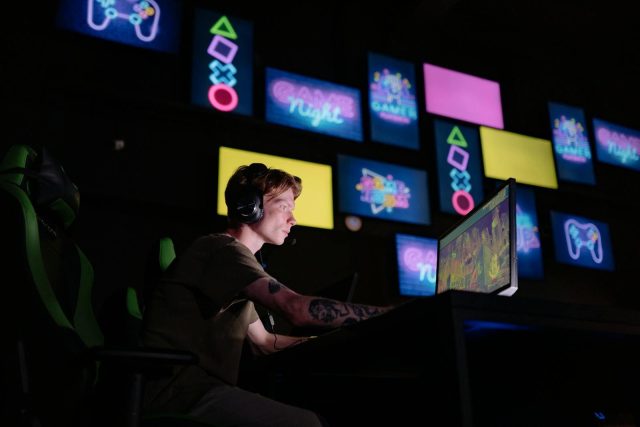
There was a time when starting a game felt like a small commitment. You’d install it, maybe tweak a few settings, wait through loading screens, and only then settle in. That process created a kind of mental barrier. You didn’t jump in unless you were ready to stay for a while. That’s changed. Quietly, and almost completely. Platforms like Steam normalized something much simpler. You click, and the game opens. No friction, no buildup, no sense that you’re crossing into a long session. It feels closer to switching tabs than launching software. And once players get used to that, they start expecting it everywhere.
The Shift From Sessions to Moments
The biggest change isn’t technical. It’s behavioral. When access becomes instant, play stops being something you plan. It becomes something you do in between other things. A few minutes while something downloads. A quick round before heading out. Ten minutes that weren’t meant for gaming at all. That shift has shaped how modern games are built. Shorter loops. Faster feedback. Less setup. You can see the same pattern in competitive titles like Counter-Strike 2, where getting into a match is streamlined to the point where hesitation disappears. The system assumes you don’t want to think about starting. You just want to start. And that expectation doesn’t stay limited to shooters or PC games.
Instant Play as a Design Standard
Once players experience frictionless entry, anything slower starts to feel off. Even small delays become noticeable. A few extra seconds on a loading screen. An extra confirmation step. A menu that asks you to make decisions before you’ve even begun. None of these are major problems on their own, but together they create resistance. Developers have responded by rethinking how games begin. Instead of presenting options upfront, many games now drop players directly into action. Menus come later. Settings become secondary. The first goal is simple: remove the gap between intent and play.
Casino-style games have leaned into this especially well, often mirroring the same logic you see in modern PC ecosystems. You open a game, and something is already happening. The interface doesn’t ask much of you. It assumes you’re here to interact, not configure. Even outside traditional platforms, the same expectation shows up in how quickly players want to access content, whether that’s through a browser or something like a betway malawi apk download, where the emphasis is on getting from install to interaction with as little interruption as possible. That’s where the influence of Valve Corporation becomes more visible. Not because they designed these systems directly, but because they helped define what “normal” feels like.
The Psychology of No Friction
There’s a subtle difference between starting something quickly and feeling like you’ve already started. Instant play blurs that line. When a game opens immediately, without interruption, it removes the moment where you might reconsider. There’s no pause to think, no small delay that gives you space to step back. You’re already inside the experience before that thought even forms. That doesn’t just increase engagement. It changes how players relate to time. A five-minute session no longer feels like a session. It feels like a brief extension of whatever you were already doing. That’s why these systems work so well in environments where attention is split. The entry point becomes almost invisible.
Performance as Perception
What’s interesting is that instant play isn’t only about speed. It’s about how speed is presented. A game doesn’t need to load everything at once. In many cases, it shouldn’t. Instead, assets appear as needed. Interfaces fill in gradually. The player starts interacting before the system has fully caught up behind the scenes. From a technical perspective, it’s staged loading. From a player’s perspective, it feels seamless. That distinction matters. Because once something feels seamless, it becomes the expectation. Not the exception.
Part of that comes down to how well the experience hides its own complexity. Small animations, quick responses, and subtle transitions give the sense that everything is ready, even if parts are still loading in the background. As long as nothing interrupts the flow, players rarely notice what’s happening underneath. But the moment that flow breaks, even slightly, it stands out. A short delay feels longer than it is. A pause draws attention to the system instead of the game. That’s why the goal isn’t just speed. It’s continuity. Making sure the player never feels like they’re waiting at all.
Where It’s Heading
The idea of “launching” a game is slowly fading. In its place, there’s a more fluid model. Games open the way apps do. Sessions begin without announcement. Interaction starts before the structure fully forms. It’s not a dramatic shift. There’s no clear moment where it happened. It built up gradually, through small improvements that removed friction one step at a time. Shorter load times, cleaner interfaces, fewer decisions upfront. None of it felt revolutionary on its own, but together it changed the rhythm of how games are accessed. But if you’ve used platforms like Steam long enough, you can feel it. You click. And you’re already playing. There’s no transition phase anymore, no clear line between not playing and playing. It just blends together. And once that becomes familiar, anything that slows it down starts to feel outdated. Everything else now has to keep up.